
DKA, Euglycemic DKA and HHS
What's Changed in How We Treat Hyperglycemic Crises
Key takeaways from the DVM STAT webinar with DVM STAT Criticalist Julien Guillaumin, Doct Vet, DACVECC, DECVECC
Hyperglycemic crises are some of the highest-stakes endocrine emergencies we see in small animal practice. Comorbidities are common and the treatment recommendations have shifted over the past few years. With the introduction of SGLT2 inhibitors for feline diabetics, we now also see a new entity, euglycemic DKA (eDKA), that demands a counterintuitive treatment approach.
Below is a practical, evidence-based summary of how DVM STAT criticalist Dr. Julien Guillaumin approaches DKA, HHS, and eDKA, drawn from his recent CE webinar and the 2024 human consensus guidelines that informed it.
Missed the live CE?
You can still take the free course on-demand and receive 1 hour of RACE-approved CE here and check out our entire live and on-demand CE library here.
Three Entities on One Spectrum
DKA, HHS, and eDKA are best understood as related expressions of insulin dysfunction, not as separate diseases.
Diabetic Ketoacidosis (DKA)
DKA is the metabolic consequence of absolute or relative insulin deficiency. Without insulin, fatty acids are mobilized and shunted toward ketogenesis. Acetyl-CoA is converted to acetoacetate, acetone, and beta-hydroxybutyrate, producing the classic high anion gap metabolic acidosis.
Hyperosmolar Hyperglycemic Syndrome (HHS)
In HHS, insulin is still present in sufficient quantity to suppress ketogenesis, but glucagon and counter-regulatory hormones drive profound hyperglycemia. The ADA defines HHS in humans as plasma glucose >600 mg/dL, effective osmolality >320 mOsm/L, and absence of significant ketoacidosis.
Calculate osmolality as: 2(Na + K) + BUN/2.8 + Glucose/18.
In practice, DKA and HHS overlap. Mixed DKA is common (DKA with hyperosmolality), and treatment differs less between DKA and HHS than the textbooks suggest.
Euglycemic DKA (eDKA)
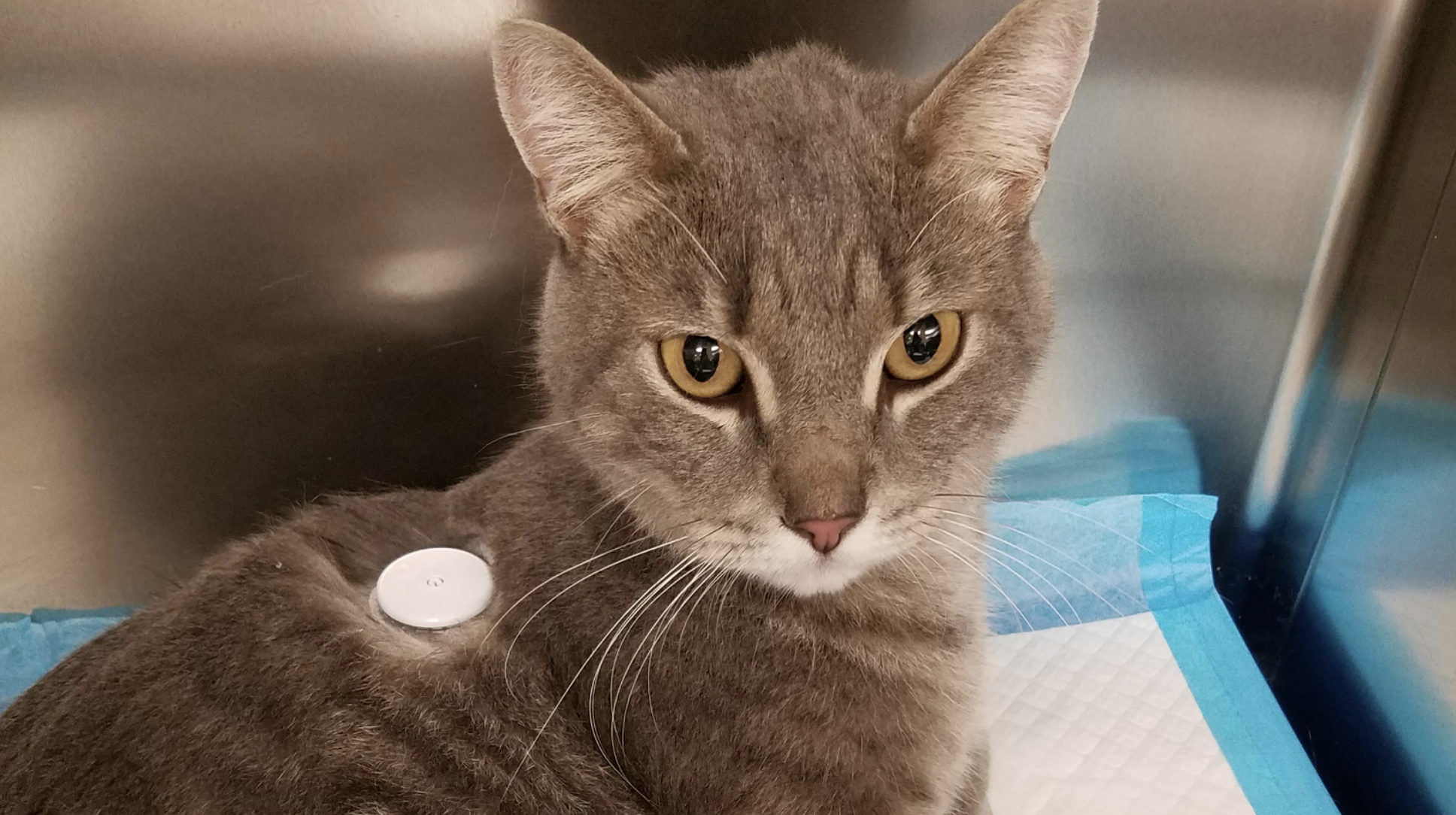
eDKA is ketosis with acidosis in a patient whose glucose is normal or only mildly elevated. It is now an emerging concern in feline practice because of SGLT2 inhibitors (bexagliflozin, velagliflozin). These drugs block glucose reabsorption in the renal proximal tubule, driving glucosuria. The patient looks euglycemic, but ketogenesis can proceed unchecked, especially in cats with risk factors.
Per the SENSATION study (2024), risk factors for eDKA include previous insulin treatment, baseline triglycerides above 400 mg/dL, a 10-fold increase in serum triglycerides, and more than 8% body weight loss in the first 2 weeks of therapy. eDKA typically presents within 2 weeks of starting an SGLT2 inhibitor, and the incidence is low overall (5% with bexagliflozin, 7% with velagliflozin).
How These Cases Present
There is no signalment predisposition. The clinically important fact is that 50-80% of DKA dogs and cats are undiagnosed diabetics at the time of crisis. Owners often have no idea their pet is diabetic.
Presenting signs are nonspecific:
• General: Anorexia, lethargy
• GI: vomiting, diarrhea
• Urinary: PU/PD (often historical)
• Ocular: sudden-onset blindness, cataracts in dogs
• PE: dehydration, +/- ketone breath
Making the Diagnosis
The current diagnostic criteria, adapted from the human 2024 Umpierrez consensus statement, are useful for both classification and prognosis.
DKA
• Glucose ≥200 mg/dL OR prior history of diabetes
• Beta-hydroxybutyrate ≥3.0 mmol/L OR urine ketones 2+
• pH <7.3 and/or HCO3 <18 mmol/L
HHS
• Plasma glucose ≥600 mg/dL
• Effective osmolality >300 mOsm/kg (or total >320)
• BHB <3.0 mmol/L
• pH ≥7.3, HCO3 ≥15 mmol/L
The Specifics of Ketone Measurement
Urine dipsticks detect acetoacetate but miss beta-hydroxybutyrate, which is the dominant ketone in active DKA. Quantitative BHB on a handheld ketone meter is more reliable. In cats, a BHB of 2.4 mmol/L is 100% sensitive and 87% specific for DKA.
Always work up comorbidities. CBC, chemistry, UA, thoracic radiographs, abdominal ultrasound, cPL or fPL. The precipitating cause matters as much as the crisis itself.
The Four Pillars of Treatment
Every hyperglycemic crisis is managed across four parallel tracks: fluids, insulin, electrolytes, and the precipitating cause.
1. Fluid Therapy
Choose a balanced isotonic crystalloid. LRS or Plasmalyte A/148 are preferred over 0.9% NaCl. Evidence from the SMART trial (NEJM 2018) and Hammond (NEJM 2022) shows balanced solutions improve renal outcomes and reduce mortality. In DKA specifically, Gupta (2024) showed balanced solutions improve electrolyte balance and prevent hyperchloremic metabolic acidosis.
Why we have moved away from 0.9% NaCl in the hyponatremic DKA patient: the hyponatremia is not from vomiting and diarrhea (V/D contains very little sodium). It is driven by osmolar shifts. As glucose rises, water moves from ICF to ECF, diluting the measured sodium.
Use corrected Na to guide fluid choice: Corrected Na = patient Na + (patient Na - 100)/100 × 1.6
Choose a fluid that is isotonic to the patient within 10 mEq/L of the patient's corrected Na. Rapid volume expansion with a fluid that mismatches the patient's tonicity can drive dangerous sodium shifts.
Practical fluid plan:
• Treat shock over 1 hour
• Rehydrate over 10-12 hours
• Alternative: ¼ of the deficit over 50-60 minutes, remainder over 10 hours
• Always add maintenance plus ongoing losses (osmotic diuresis can be substantial)
2. Insulin Therapy
For moderate to severe DKA, IV insulin is the standard. For mild DKA, SQ or IM insulin in a hydrated, eating patient is appropriate. For HHS, IV insulin at a slower rate is reasonable.
Fixed-rate CRI protocol (from human medicine): 0.1 U/kg/hr regular insulin IV. Start fluids and insulin together (within 1 hour, per the 2023 Joint British Societies guidelines). When BG drops below 250 mg/dL, continue the insulin at 0.1 U/kg/hr and add 10% dextrose, OR drop the insulin to 0.05 U/kg/hr alongside dextrose.
Macintire (sliding scale) protocol: add 2.2 U/kg regular insulin to a 250 mL bag of 0.9% NaCl. Adjust the rate based on BG. Claus (2010) validated this dose for cats, challenging the historical practice of halving the canine dose.
Why add dextrose? The goal is to shift the metabolic pathway. You want to bombard the cells with insulin to switch from ketone utilization to glucose utilization. Dextrose lets you keep insulin running without dropping BG dangerously low.
In HHS, there is no physiologic need to rehydrate before starting insulin. This is also not standard of care in people.
3. eDKA: Counterintuitive but Critical
Treatment of eDKA looks wrong at first glance: you are giving insulin to a normoglycemic cat. But the cells need insulin to shift away from ketone utilization. Without it, ketogenesis continues.
• Start IV insulin immediately despite the normal glucose
• Add 5-10% dextrose concurrently to support glucose utilization and prevent hypoglycemia
• Published fixed-rate protocols recommend pairing isotonic fluids with isotonic dextrose-containing fluids
4. Electrolyte Correction
Hyperglycemic crisis patients are universally electrolyte-depleted, even when their numbers look normal on presentation.
Sodium. Most patients are hyponatremic at presentation. Corrected hypernatremia can be seen in HHS. Use corrected Na (1.6 correction factor validated for dogs). Monitor corrected Na q4-12h, not measured Na. Do NOT give high-sodium fluids unless the corrected Na is high.
Potassium. Patients may present hypokalemic (from diuresis), hyperkalemic (from acidosis-driven shifts), or normokalemic with counteracting forces. All patients have total-body K depletion. Avoid exceeding 0.5 mEq/kg/hr.
Phosphorus. Often masked by dehydration on presentation, then drops within 24 hours after starting insulin. Hypophosphatemia drives hemolysis, weakness, respiratory depression, and neurologic signs. Dose Kphos at 0.01-0.06 mmol/kg/hr IV (quick tip: 0.03 mmol/kg/hr contains 0.05 mEq/kg/hr of K, so account for it in your K math).
Magnesium. Hypomagnesemia is common and drives refractory hypokalemia and arrhythmias. Supplement MgSO4 0.5-1 mEq/kg/day CRI. Plasmalyte contains 5 mEq Mg/L, so you may already be partially supplementing.
Bicarbonate. Controversial and rarely indicated. Most patients self-correct with fluids and insulin.
5. Treat the Precipitating Cause
Common triggers include acute or chronic pancreatitis, UTI or pyelonephritis, hyperadrenocorticism, exogenous steroid administration, AKI or CKD, neoplasia, hepatic lipidosis, cholangiohepatitis, chronic enteropathy, dental disease, pyoderma, triaditis in cats, and obesity.
Client Communication
Be direct. DKA and HHS are acute crises caused by an underlying chronic disease. There is no cure for diabetes mellitus, and management requires twice-daily insulin injections for life. That commitment is not feasible for every household so have the financial and lifestyle conversation early.
Survival is approximately 70-80% with appropriate intervention, so the prognosis is genuinely good when families can commit.
Take-Home Pearls
• DKA, HHS, and eDKA exist on a spectrum. Treatment differs less than the labels suggest
• 50-80% of patients are undiagnosed diabetics at the time of crisis
• Use corrected Na and choose a fluid isotonic to the patient within 10 mEq/L
• Avoid 0.9% NaCl in hyponatremic patients
• eDKA: start insulin immediately despite euglycemia. Add 5-10% dextrose
• Monitor electrolytes q4-12h. Phos and Mg drop after insulin starts
• Always treat the precipitating cause

Download the DKA, eDKA & HHS Quick Reference (Free)
Want a concise, clinic-friendly summary you can save or share with your team?
Download the DKA, eDKA & HHS Top Takeaways Quick Reference PDF, which includes the key diagnostics, treatment recommendations, prognostic indicators and monitoring recommendations in an easy, printable format.
Missed the live CE?
You can still take the free course on-demand and receive 1 hour of RACE-approved CE here and check out our entire live and on-demand CE library here.
Complex cases are also easier when they are not managed alone. DVM STAT criticalists are available 24/7 for immediate phone consults on unstable patients, and full case reviews are returned in written consult reports within two hours.
Need Help Co-Managing Critical ECC Cases?
Through DVM STAT’s Emergency & Critical Care teleconsultations, primary care teams gain access to board certified internal medicine specialists who provide: Immediate phone consults by calling the STAT line 24/7/365 or submit through the DVM STAT portal to save time on the phone - receive a phone call within 20 minutes to discuss your case.
Case specific diagnostic guidance
Step by step treatment plans
Support for interpreting complex or conflicting test results
Follow up support to adjust treatment plans over time with the same criticalist for case continuity
Consults are available on demand and designed to support the veterinarian client patient relationship while improving patient outcomes.
Already have an account? Submit an Emergency & Critical Care teleconsultor Call the STAT line directly