
Highlights from the 2026 AAHA Feline Diabetes Guidelines
Why it Matters in Practice
The 2026 AAHA Diabetes Management Guidelines for Cats represent the most significant update to feline diabetes care in nearly a decade.
The document reflects substantial changes in the therapeutic landscape, most notably the formal incorporation of SGLT2 inhibitors, alongside meaningful shifts in how diabetic cats should be diagnosed, monitored, and managed long-term.
For general practitioners, ER clinicians, and urgent care veterinarians, several of these changes have direct workflow implications.
The following summary highlights the most clinically relevant updates and the practical considerations that come with them.
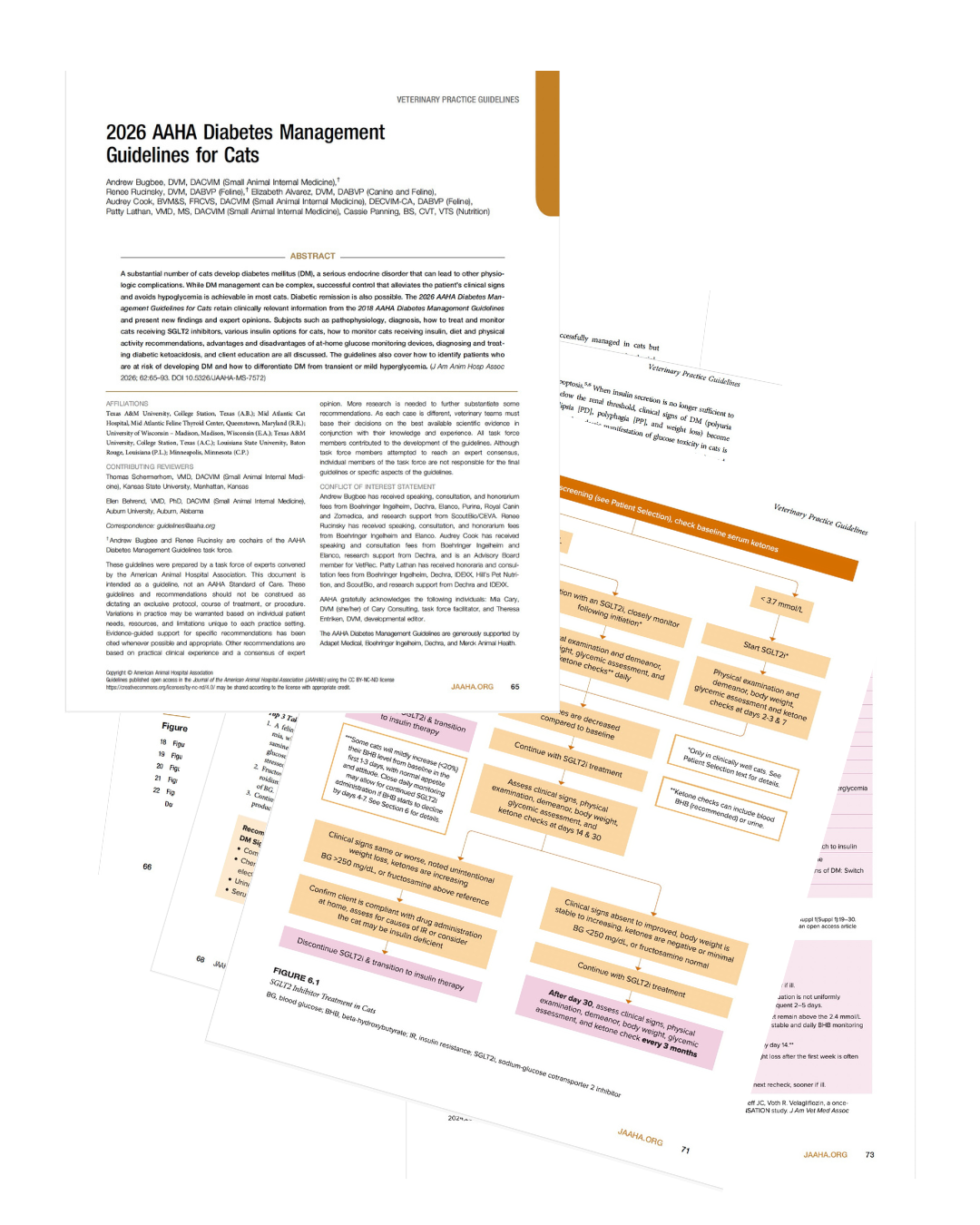
2026 AAHA Diabetes Management Guidelines for Cats are open access and available through the AAHA website
SGLT2 Inhibitors as a First-Line Option
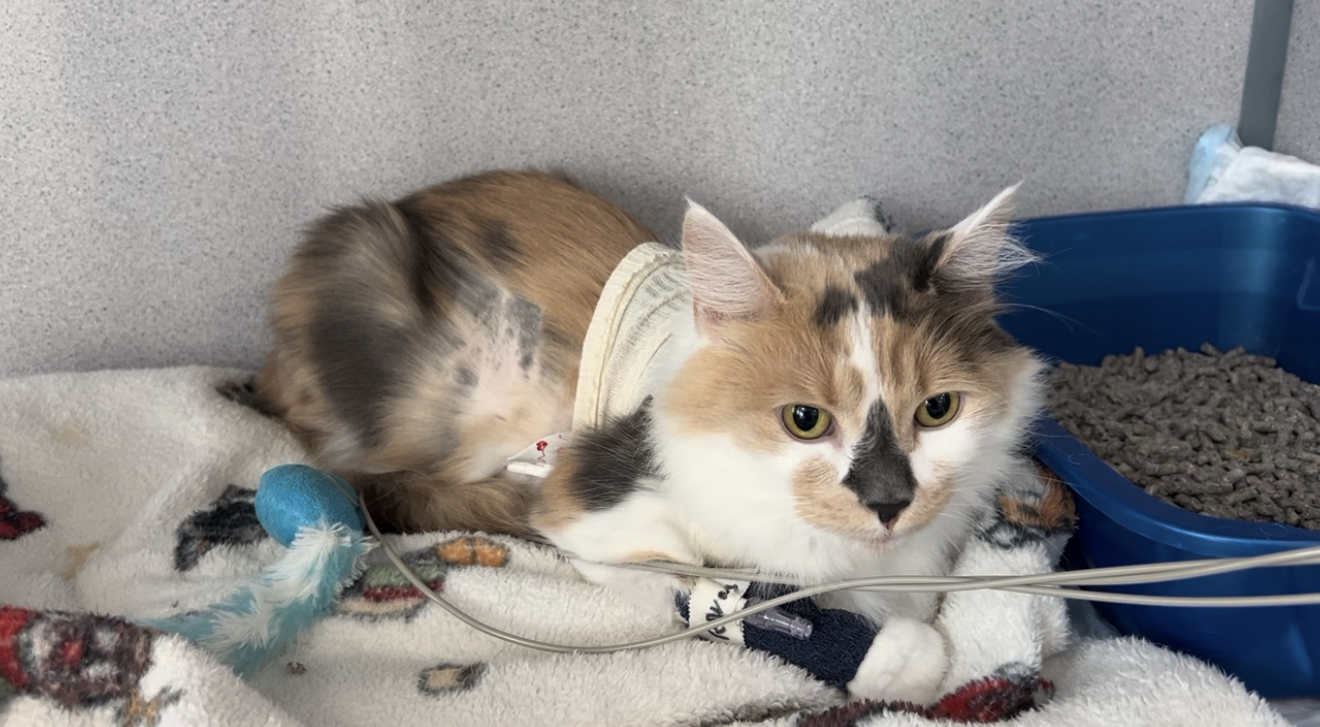
The single most consequential change from the 2018 guidelines is the formal recognition of SGLT2 inhibitors as a first-line treatment option for newly diagnosed, otherwise healthy diabetic cats. Bexagliflozin and velagliflozin are both now licensed in the United States, and the guidelines outline clear criteria for when each can be appropriately considered.
The appeal of this drug class is significant. Once-daily oral administration replaces twice-daily subcutaneous injection, which expands treatment access for clients who cannot reliably administer insulin. The mechanism of action also eliminates the clinical hypoglycemia risk that complicates insulin therapy, particularly in cats with remission potential.
It is critical, however, to recognize that SGLT2 inhibitors are not interchangeable with insulin. They work through a fundamentally different mechanism, blocking renal glucose reabsorption rather than driving cellular uptake, and they rely on continued endogenous insulin production from the cat's own beta cells. When that endogenous insulin production is insufficient, ketone production accelerates rapidly, and euglycemic diabetic ketoacidosis (EDKA) can develop with little warning.
This is why patient selection is paramount. The guidelines are explicit: SGLT2 inhibitors are contraindicated in cats with vomiting, hyporexia, cachexia, lethargy, severe chronic kidney disease, or current ketonemia or ketonuria. Sick, dehydrated, or anorexic diabetic cats are not candidates for this drug class. They require insulin therapy.
Blood BHB Measurement Is Now Considered Essential
The guidelines now consider blood beta-hydroxybutyrate (BHB) measurement essential before initiating any cat on an SGLT2 inhibitor, and essential for ongoing monitoring during the first two weeks of therapy. The Precision Xtra meter remains the only validated handheld ketone meter for use in cats. The task force recommends that clinics treating diabetic patients have one available.
Specific BHB cutoffs are provided in the package inserts. Bexagliflozin should not be initiated if blood BHB is greater than 3.6 mmol/L, or above 2.4 mmol/L in a cat with a history of acidosis or renal compromise. The guidelines acknowledge that experienced clinicians may occasionally initiate therapy in cats with mildly elevated BHB if the patient is clinically well and can be monitored daily, though this approach requires careful documentation and ideally specialist consultation.
The broader clinical principle: BHB is the earliest and most predominant ketone in feline DKA. Urine dipsticks measure acetoacetate, which lags behind BHB elevation. Practices managing diabetic cats without the ability to measure blood BHB are operating with limited diagnostic visibility.
In-Clinic Blood Glucose Curves Are No Longer Recommended
The guidelines now explicitly state that in-clinic blood glucose curves are not recommended for routine monitoring of diabetic cats. The reasoning is well-supported by the literature. Stress hyperglycemia confounds nearly every reading. Day-to-day variability is significant even in well-regulated patients. An 8 to 10 hour snapshot taken in a hospital environment is a poor proxy for what the cat is actually doing at home.
Continuous glucose monitors (CGMs), with the FreeStyle Libre being the most commonly used in feline patients, provide significantly more useful data even when sensor retention is limited to a few days. CGMs capture the cat's full daily routine, can identify nocturnal hypoglycemia that would be missed entirely by an in-clinic curve, and are generally better tolerated than the repeated venipunctures required for a traditional BG curve.
The practical guidance from the guidelines: place a CGM at the first recheck (5 to 7 days after initiating insulin), and continue rechecks every 5 to 7 days during the initial regulation period. Long-term, periodic CGM placement remains valuable, particularly in cats with remission potential where catching the downward trend in insulin requirements early can prevent hypoglycemic events.
One important technical caveat: the FreeStyle Libre is calibrated for humans, not cats. Low readings should be confirmed with a veterinary-calibrated portable BG meter (the AlphaTrak 3 is the current standard) before therapy adjustments are made. Client education on this point is essential from the outset.
Refined Insulin Recommendations
For clinicians continuing with insulin therapy, which remains the appropriate choice for many cats, the recommendations are largely consistent with prior guidance. Glargine U-100 and PZI U-40 remain the first-choice insulins, both starting at 1 unit per cat every 12 hours. NPH continues to be excluded due to its inadequate duration of action in cats (less than 8 hours).
The notable addition is the inclusion of glargine U-300 as a viable option for difficult-to-regulate cats, or for clients who would benefit from once-daily dosing. The guidelines describe it as more concentrated but less potent than U-100, with a flatter time-action profile that more closely resembles basal insulin secretion. It is dosed at 0.5 U/kg every 12 to 24 hours and must be administered via the manufacturer's pen device. Clinical experience with this insulin is growing, particularly in cats with hypersomatotropism or other complex insulin resistance.
Several practical insulin handling points are reinforced in the guidelines. Insulin pens require priming before each dose, and the needle should remain in the patient for the full manufacturer-recommended injection time (often around 10 seconds) to ensure complete dose delivery. Needles in the 10 to 12 mm range are appropriate for use through feline fur. Refrigerated insulin remains stable well beyond the manufacturer-stated in-use duration, and a 2023 study demonstrated that preservative-containing vials remained sterile through 6 months of use.
Diabetic Remission Remains a Realistic Goal
The guidelines continue to support diabetic remission as a meaningful clinical target, citing an average remission rate of approximately 30% in the United States. Approximately 25% of cats achieving remission do so within 2 to 3 months of diagnosis, and over 50% achieve it within 6 months.
What predicts remission, more than the specific drug used, is the speed and thoroughness with which glucose toxicity is reversed and reversible causes of insulin resistance are addressed. Obesity, glucocorticoid administration, and dental disease are the most common modifiable factors. Aggressive intervention on these fronts improves remission rates substantially.
A high-protein, low-carbohydrate canned diet remains the recommended nutritional approach. Targets include greater than 40 to 45% ME from protein and less than 12 to 15% ME from carbohydrate. Canned food offers lower carbohydrate density, easier portion control, and additional water intake. Meal feeding is preferred for intermediate-acting insulins, but graze feeding is acceptable if the cat's eating habits cannot be modified or if glargine U-300 is being used.
One critical safety point bears emphasis: cats receiving exogenous insulin who undergo unrecognized remission are at significant risk for life-threatening hypoglycemia. This is the core argument for ongoing monitoring. If a previously well-regulated diabetic cat begins losing weight, becoming lethargic, or eating less, the differential should include transition to remission, not simply disease progression. A glucose check and a ketone check are warranted in these scenarios.
Diagnostic Criteria and Workup
The diagnostic criteria for feline DM are unchanged but worth restating. A single elevated BG in clinic is not sufficient for diagnosis. Evidence of sustained hyperglycemia is required, which can come from one or more of the following: increased fructosamine concentration, sustained or recurrent hyperglycemia documented in a non-stressed environment (CGM data is well-suited for this purpose), or persistent glucosuria documented at home.
The full diagnostic workup for any newly diagnosed diabetic cat should include CBC, chemistry panel with cholesterol, triglycerides, and electrolytes, urinalysis with sediment examination, total T4, blood BHB, and consideration of retroviral testing. Comorbidities should be identified and addressed aggressively. Pancreatitis, hyperthyroidism, hypercortisolism, and hypersomatotropism all interfere with diabetic regulation and are routinely identifiable with appropriate diagnostic workup.
Stress hyperglycemia remains the most common diagnostic confounder. A cat with hyperglycemia in clinic but no clinical signs of DM should be evaluated for stress as the cause before treatment is initiated. A CGM placed at home for several days is often the most efficient way to clarify these cases.
When Specialist Consultation Adds Value
Feline diabetes management has become more nuanced, not less. The introduction of SGLT2 inhibitors expands therapeutic options but also expands the ways management can go wrong if patient selection or monitoring is suboptimal. Cats with significant concurrent disease, hypersomatotropism, refractory regulation, or recurrent DKA episodes are precisely the patients where board-certified internal medicine consultation can meaningfully change outcomes.
DVM STAT was built to make specialist input accessible without the friction of multi-week referral delays or ongoing subscription fees.
Internal medicine specialists are available 7-days-a-week for complex diabetic cat cases, including newly diagnosed patients who don't fit the typical playbook, cats on SGLT2 inhibitors with rising ketones, and difficult-to-regulate cases where standard options have been exhausted.
The full 2026 AAHA Diabetes Management Guidelines for Cats are open access and available through the AAHA website. Every clinician managing diabetic cats will benefit from reviewing the document in full. The decision algorithms for SGLT2 inhibitor patient selection, DKA treatment, hypoglycemia management, and high-dose insulin troubleshooting are particularly valuable references for daily practice.
2026 AAHA Diabetes Management Guidelines for Cats are open access and available through the AAHA website